Quality Skill Development Training Institute (QSDTI)
Established on the 3rd Floor of the Labour Commission Building in Kalna, Purba Bardhaman, QSDTI is a leading allied healthcare skill development center. The institute provides certified training pathways, including CMS-ED primary care, nursing assistance, medical lab tech assistance, and geriatric home care.
Autonomous Healthcare Skill Center
Kalna, Purba Bardhaman, WB
CMS-ED, Nursing Assistant, DMLT
Partnered Diagnostic & Ward practice
+91 94771 26246 / 034 5435 3730
About QSDTI Kalna
Quality Skill Development Training Institute (QSDTI) is an autonomous medical training and examination center operating under the aegis of the Quality Academy & Research Centre (QARC). Located in the historical town of Kalna, the institute's primary mission is to bridge the gap in rural allied healthcare services.
By providing practical-oriented education, QSDTI equips local youth with essential paramedical skills, nursing protocols, and laboratory diagnostic techniques. The training model emphasizes hands-on practice, community healthcare values, and self-employment readiness, preparing students to play vital support roles in West Bengal's rural and urban medical networks.
Our Mission
To empower aspiring healthcare students through affordable, quality-driven vocational training, cultivating medical laboratory skills and nursing assistant competencies to serve underrepresented communities.
Our Vision
To stand as a model healthcare skill institute in Purba Bardhaman district, recognized for nurturing ethical clinical assistants, primary care coordinators, and rural health advocates.
Why Choose QSDTI?
Community Medical Services & Essential Drugs (CMS-ED)
The CMS-ED course is a key educational pathway at QSDTI, designed for individuals intending to establish primary healthcare centers or practice first-aid in rural and semi-urban localities. The curriculum is based on the World Health Organization (WHO) list of essential medicines, providing theoretical knowledge and clinical methodologies to handle minor ailments safely.
10th Pass (Madhyamik) or equivalent from a recognized board.
2 Years (consisting of theory lectures and clinic rotations).
- Basic anatomy and physiology
- Pharmacology of WHO-listed drugs
- Triage and basic wound dressing
- Community health and hygiene standards
Note: CMS-ED diploma certificate holders are authorized to recommend primary healthcare and manage rural dispensaries containing specified over-the-counter and essential drugs, as per the Hon'ble Supreme Court guidelines on community medical services.
Courses & Diplomas Offered
Each training stream at QSDTI features structured lectures, assessment tests, and supervised practice inside our laboratory blocks.
Community Health & Primary Care
CMS-ED (Community Medical Services & Essential Drugs)
Designed according to primary health guidelines to prepare community health providers in essential drugs usage and primary healthcare assistance for rural dispensaries.
Nursing & Paramedical Support
Nursing Assistant Diploma
Comprehensive clinical training covering ward administration, patient safety, basic diagnostics, and bedside care support in hospitals.
Paramedical Assistant Pathway
Practical, lab-intensive training preparing assistants for medical laboratories, operation theaters, and diagnostic screening clinics.
Diagnostics & Pathology
DMLT (Diploma in Medical Laboratory Technology) Assistant
Prepares students in sample processing, pathology lab calibrations, chemical analysis support, and hematological reporting.
Home Care & Geriatric Health
Geriatric & Elderly Care Support
Bedside mobility, nutritional assistance, emergency support, and primary wellness companion skills for seniors and bedridden patients.
Fire & Safety Management
Diploma in Fire Safety & Disaster Management
Practical drills, emergency rescue, hazard audits, industrial safety standards, and disaster mitigation strategies.
Computer & Office Applications
Diploma in Computer Applications & Healthcare IT
Combines fundamental IT literacy with medical billing systems, patient database management, and administrative office tools.
Campus & Lab Facilities
Our classroom and clinical laboratories are located on the 3rd Floor of the Labour Commission Building. They are configured to match medical education standards, giving students hands-on access to practical diagnostic and nursing care apparatus.
Features anatomical charts, organ models, and medical skeletal models to facilitate a clear understanding of human structure.
Equipped with chemical test benches, slides, compound microscopes, centrifuges, and vitals check monitors (BP, ECG, SpO2).
Includes a mock patient ward bed, CPR training manikins, oxygen cylinders, nebulizers, and emergency dressing boxes.
Contains textbooks on pathology, basic nursing protocols, community medicine, and pharmacopoeia modules.
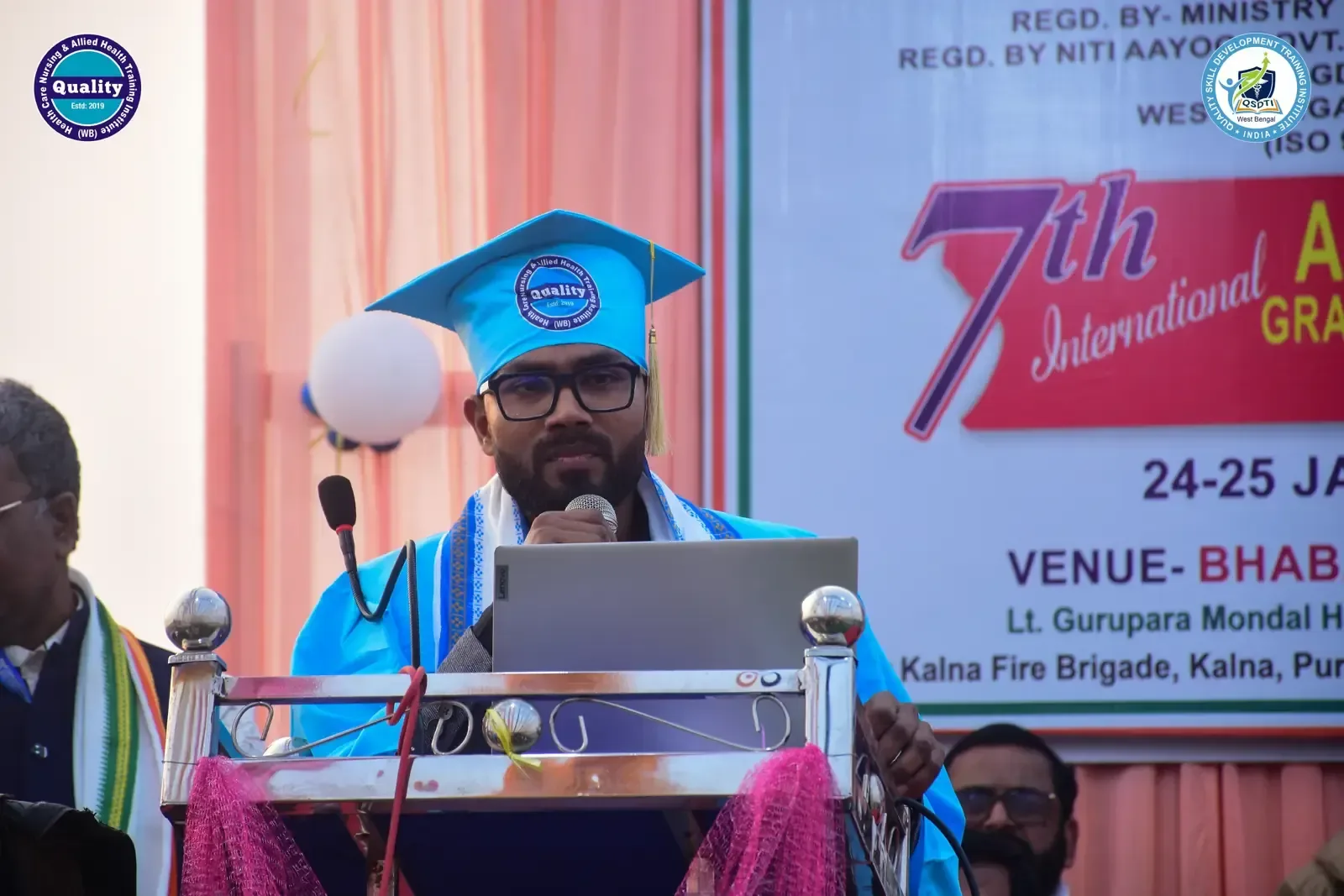
Allied Health Lab
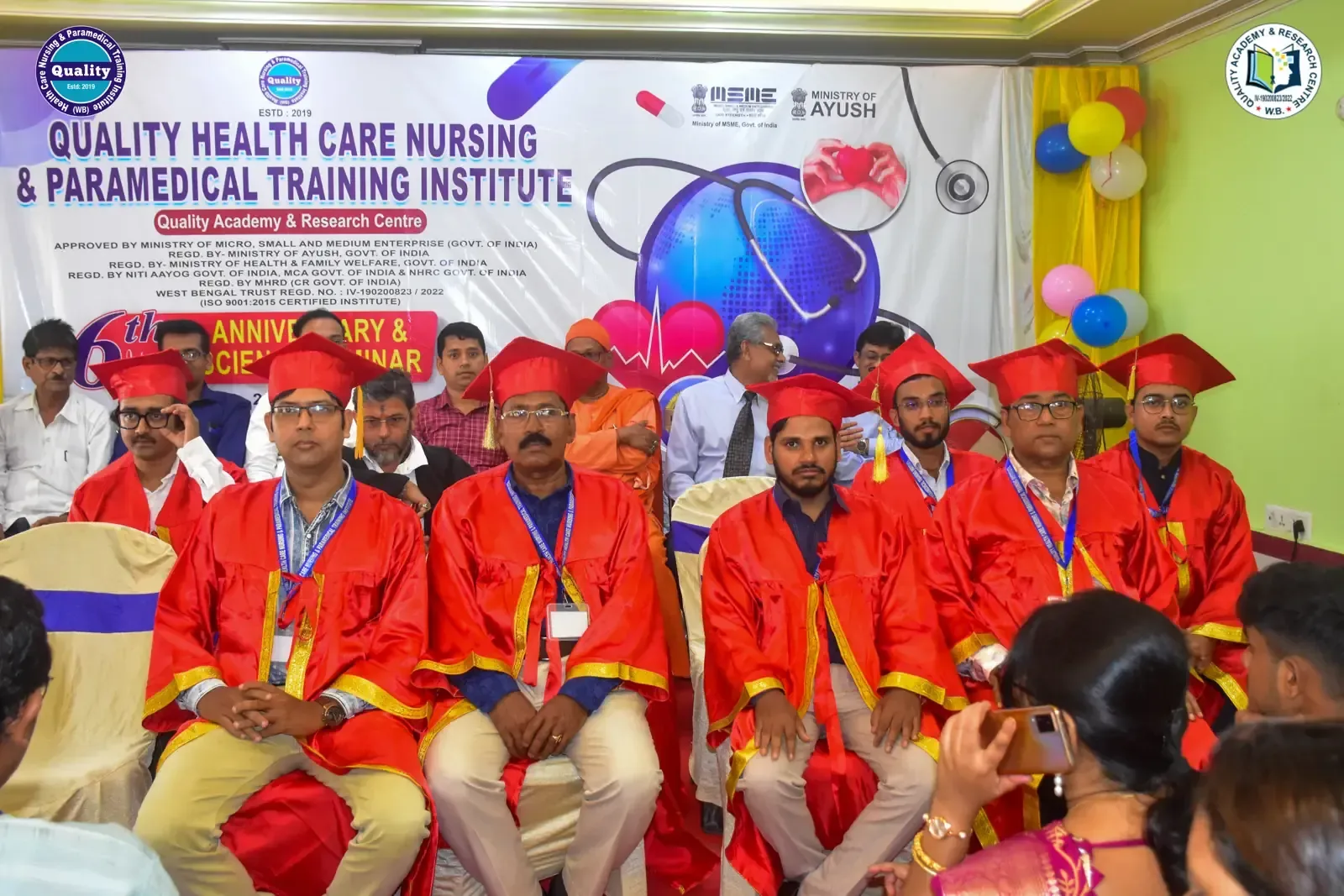
Simulation Room
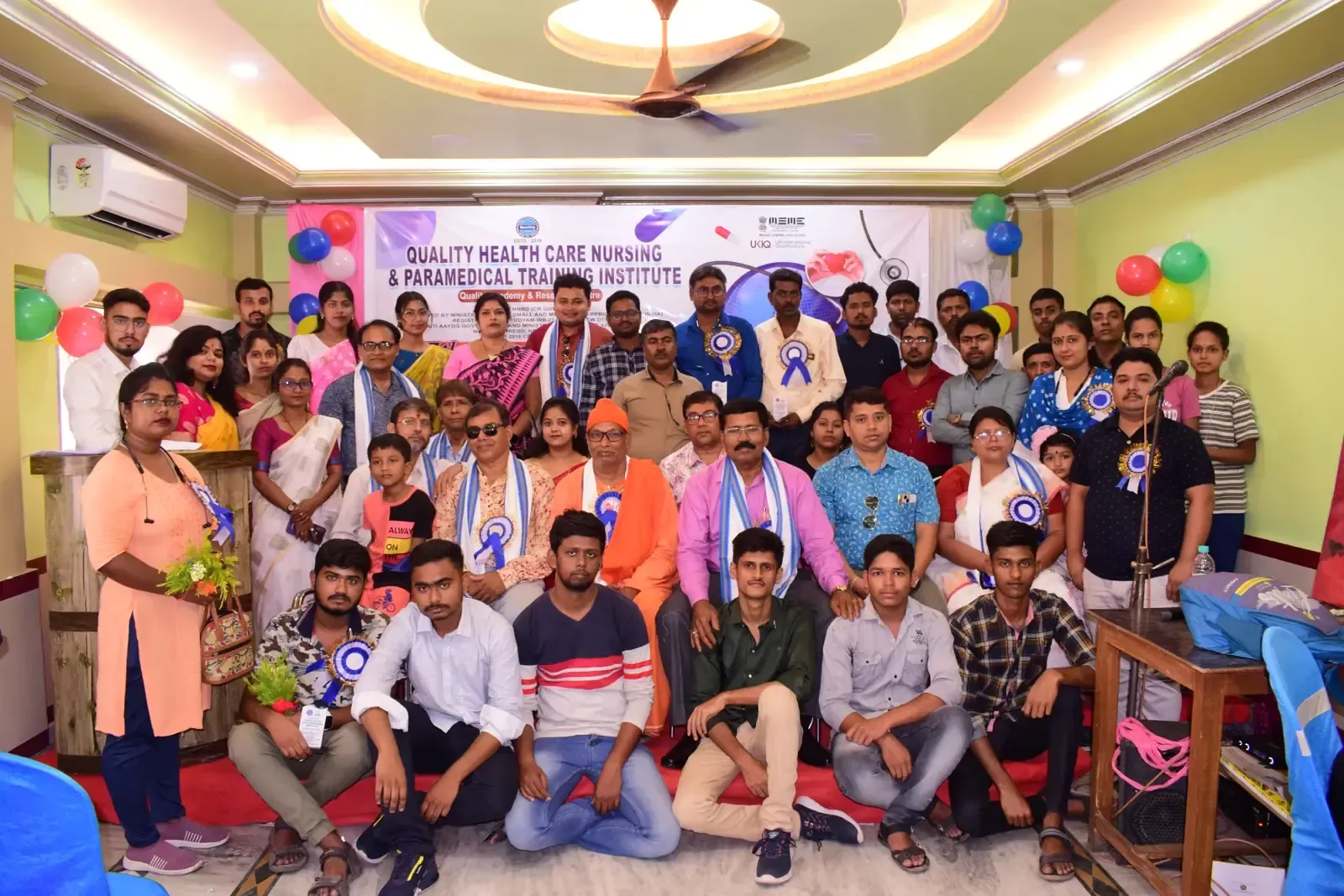
Lecture Hall
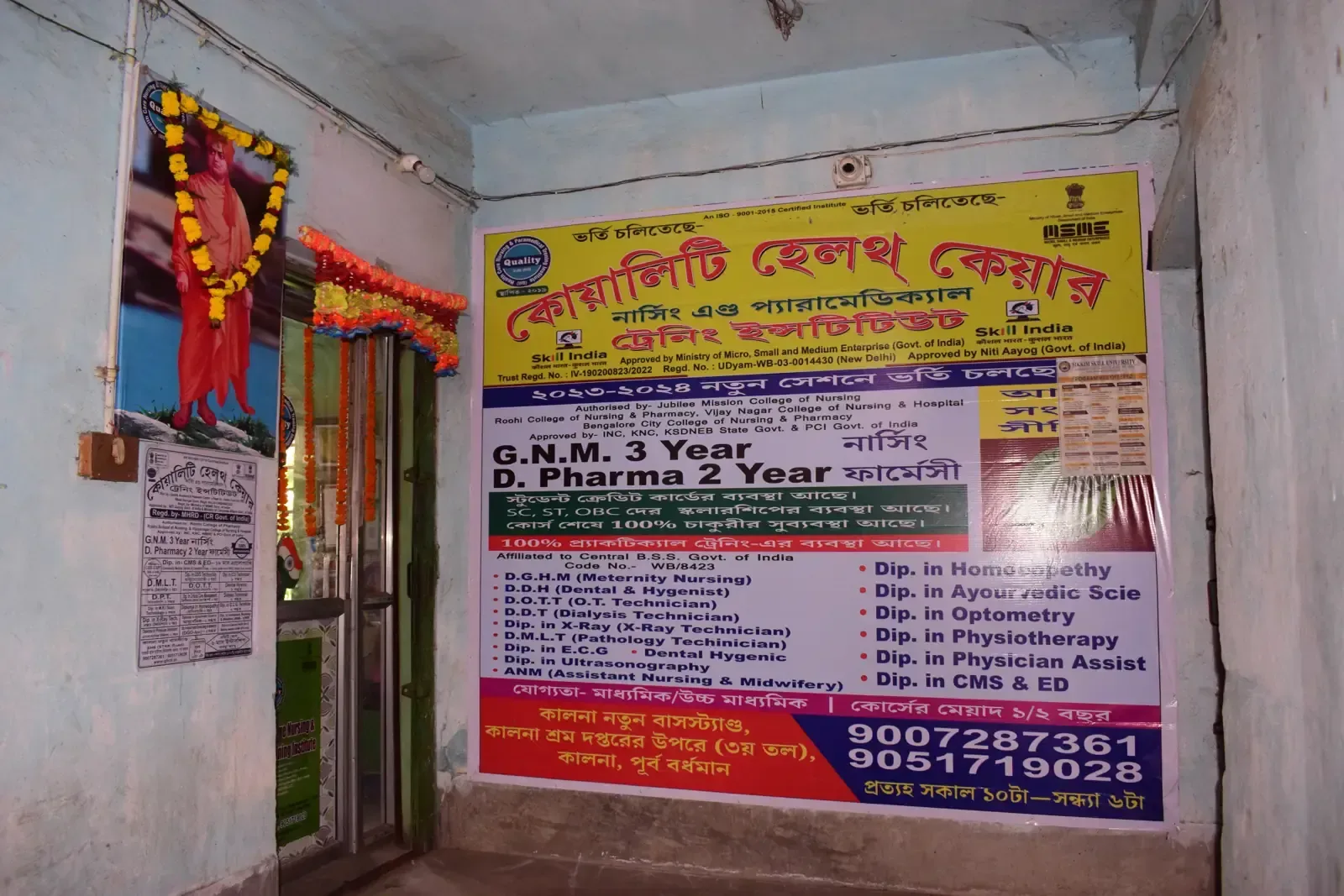
Student Practice Lab
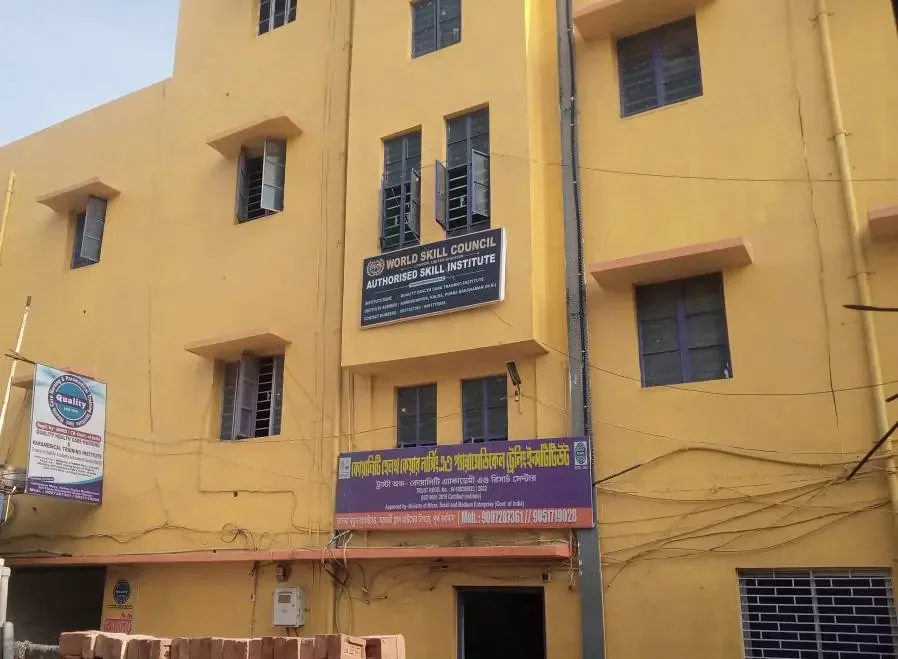
QSDTI Administration & Campus Facility
3rd Floor, Labour Commission Building, Kalna, West Bengal
Recognitions & Registrations
Quality Skill Development Training Institute (QSDTI) operates as an autonomous skill center. Below are the official credentials and registrations under its parent research body:
Established under the **Quality Academy & Research Centre (QARC)**.
Registered under the **Ministry of MSME**, Govt of India.
Listed with NITI Aayog (NGO Darpan Portal), Government of India.
Location & Travel Guide (Kalna)
Located in the cultural town of **Kalna** (also known as Ambika Kalna), Purba Bardhaman district, the institute offers a peaceful environment for healthcare studies.
The **Kalna Railway Station (KNDP)** is less than 2 km from the campus building. Regular local trains on the Howrah-Katwa line serve the station. It is an easy commute from **Bandel**, **Katwa**, **Nabadwip**, and nearby railway crossings.
The **Kalna Bus Stand** is well-connected with regular regional buses coming from **Burdwan (Burdwan town)**, **Memari**, **Purbasthali**, and **Hooghly district**. Cycle rickshaws and electric totos are readily available outside the bus stand to drop you at the Labour Commission Building.
Ambika Lodge, Geetanjali Guest House (near station area).
Local rice hotels, sweet shops, and fast-food stands near town circle.
108 Shiva Temples, Nabadwip Dham, Purbasthali Oxbow Bird Sanctuary.
Student FAQ
Q1:How can I apply for admission at QSDTI Kalna?
You can apply by filling out the online admission enquiry form on this page, visiting the official QSDTI office in Kalna, or contacting their admissions desk directly at +91 94771 26246.
Q2:Are the courses at QSDTI Kalna open to students from other districts?
Yes, students from all districts of West Bengal, including Purba Bardhaman, Burdwan, Hooghly, Nadia, and North/South 24 Parganas, are eligible to apply.
Q3:What is the fee structure for paramedical courses?
The fee structure varies by course duration and specific pathway. You can request a detailed fee brochure by submitting an enquiry through our portal.
Q4:Do you offer direct admission or is there an entrance exam?
Admissions are generally granted based on academic merit (marks obtained in 10th or 12th standard) and a counseling call, depending on the chosen course.
Q5:When do admissions start for the academic session?
Admissions typically open in the spring and summer months (April to August) for the main academic batches. Mid-year batches are also available for short-term courses.
Q6:What is the minimum eligibility for the CMS-ED course?
To enroll in the CMS-ED (Community Medical Services & Essential Drugs) course, candidates must have passed the 10th standard (Madhyamik) or equivalent from a recognized board.
Q7:Can Arts or Commerce stream students apply for nursing assistant courses?
Yes, stream restrictions do not apply to the nursing assistant and primary community health diplomas. Students from Science, Arts, or Commerce streams can apply.
Q8:Is there any age limit for enrolling in skill development courses?
Generally, candidates must be at least 17 years old. There is no strict upper age limit, making these courses ideal for career changers and rural healthcare workers.
Q9:Are there any physical fitness requirements?
Candidates should be physically and mentally fit to undergo regular clinical practice and hands-on laboratory sessions.
Q10:What is the duration of the CMS-ED course?
The CMS-ED course is a 2-year diploma program comprising theoretical lectures and mandatory clinical observation.
Q11:What is the difference between nursing assistant and GNM?
GNM (General Nursing and Midwifery) is a standard registered nursing diploma. QSDTI offers nursing assistant skill certificates, which train students as supportive ward assistants.
Q12:Do you offer computer training courses at QSDTI?
Yes, QSDTI offers a Diploma in Computer Applications tailored to healthcare IT, patient records, and medical billing.
Q13:Are short-term home care courses available?
Yes, QSDTI offers 6-month and 12-month certification programs in geriatric care and home health support.
Q14:What are the timings of the classes?
Classes are scheduled during daytime shifts. Please contact the administration desk for the specific timetable of the current batch.
Q15:What is the legal status of the CMS-ED diploma in West Bengal?
CMS-ED is a primary community health training program based on WHO guidelines for essential drugs. It qualifies candidates to operate primary health centers and rural first-aid posts.
Q16:Where do QSDTI students undergo clinical training?
QSDTI students undergo clinical training at local nursing homes, diagnostics labs, and partnered healthcare institutions under supervision.
Q17:Is QSDTI recognized by the government?
QSDTI is an autonomous training institute operating under the Quality Academy & Research Centre (QARC), which is registered with MSME (Govt of India) and NITI Aayog (NGO Darpan).
Q18:Can I open a first-aid center after completing CMS-ED?
Yes, as per guidelines, CMS-ED holders can set up rural health chambers to offer primary healthcare, first-aid, and over-the-counter WHO-listed essential drugs.
Q19:Does QSDTI provide placement assistance?
Yes, the institute has a placement cell that assists students with interview preparation and coordinates opportunities at diagnostic labs, clinics, and elder care networks.
Q20:Can I work in government hospitals with a QSDTI certificate?
QSDTI certifications are aimed at private sector employment, community health organizations, diagnostic networks, and self-employment in rural areas.
Q21:Where is QSDTI Kalna campus located?
The campus is situated on the 3rd Floor of the Labour Commission Building, near the main town center of Kalna, Purba Bardhaman, West Bengal.
Q22:Which is the nearest railway station to QSDTI?
Kalna Railway Station (KNDP) is the closest station, located less than 2 kilometers from the campus. It is well-connected to Bandel, Howrah, Katwa, and Nabadwip.
Q23:How can I travel to Kalna from Howrah or Sealdah?
You can take any local train on the Howrah-Katwa line from Howrah station, or travel via Bandel. Alternatively, bus routes connect Kalna to Burdwan, Nabadwip, and Memari.
Q24:Are there accommodation options for outstation students near QSDTI?
Yes, there are several affordable PG accommodations, guest houses, and hotels near Kalna town center and the railway station.
Q25:Are there restaurants or student mess facilities nearby?
Yes, Kalna has local eateries, student canteens, and sweet shops within walking distance of the Labour Commission Building.
Q26:What laboratory facilities are available at QSDTI?
QSDTI is equipped with basic anatomy models, clinical diagnostic equipment, pathology slide sets, and mock ward beds for nursing practice.
Q27:Are students trained in emergency first aid?
Yes, cardiopulmonary resuscitation (CPR), wound dressing, bandaging, vitals monitoring, and primary triage are core parts of the curriculum.
Q28:What is the medium of instruction at the institute?
Classes are primarily conducted in Bengali and English to ensure all local students grasp the concepts and medical terminology clearly.
Q29:Are study materials provided to students?
Yes, QSDTI provides curated modules, textbooks, and practice sheets for all theoretical and clinical classes.
Q30:Can I apply for a scholarship or fee installment plan?
Yes, QSDTI offers flexible installment options for needy and meritorious students. You can discuss this during the admission interview.
Planning your career in the medical sector? Check out our helpful local guides on Education Hubs near Sealdah, Places to Visit in Kolkata, and our Local Food & Cuisine Directory.